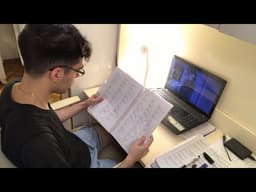
My English Learning Journey: Learning to Speak by Repeating Friends Scripts
AI summary of “My English Learning Journey: Learning to Speak by Repeating Friends Scripts” by Arsen Kocaoglu, generated by Sumvid.
Title
My English Learning Journey: Learning to Speak by Repeating Friends Scripts
One-Sentence Summary
The creator describes how he went from complete beginner to speaking English by repeating sitcom and YouTube scripts from memory, without grammar study, flashcards, or memorization, while promoting the Edrawmind mind-mapping app.
Worth Watching If
You want a personal account of one script-based speaking method, or you're curious about how sitcom scripts can be used for practice. Much of the video is repetitive and promotional, and the method is supported only by his own experience, so treat it as one learner's story rather than a proven curriculum.
Chapters
- [0:00] Intro: claims that only speaking teaches a language and that comprehensible input alone won't make you speak.
- [0:30] Lists what he did not do (grammar, flashcards, word lists, reading) and says he started practicing with the Friends script in October 2017.
- [1:39] Describes his starting level as a complete beginner who couldn't follow the show or order coffee, and says he used the first 15 episodes.
- [2:09] Distinguishes shadowing (immediate parroting of audio) from his script method, which is speaking from the text and then from memory.
- [4:16] Explains the script method steps: read the lines without phone or PC, visualize the scene, then say the lines without the script.
- [5:53] Gives his timeline: 6 to 8 months of Friends before basic sentences, then House of Cards for politics and business vocabulary.
- [6:57] Recommends vlogger channels and interest-based YouTube videos as the next stage of script practice.
- [8:02] Demonstrates Edrawmind's YouTube summarizer and mind-map feature, which is the sponsor segment.
- [11:53] Covers the app's pricing, his past purchase, and an offer to share script sources via Instagram DM.
- [13:03] Recommends sitcoms for beginners and points to a separate beginner study-plan video.
- [14:11] Sponsor disclosure, promo-code and free-trial mention, and a closing recap that repeats the main claims.
Key Takeaways
- [0:00] The creator's central claim is that you learn a language mainly by speaking it, and that comprehensible input (TV and video watching) won't make you speak.
- [1:05] He says he did not use grammar study, flashcards, memorization, word lists, reading practice, or dedicated writing practice.
- [1:39] He started with the first 15 episodes of Friends in October 2017, and he describes himself at that point as unable to understand English at all.
- [2:41] He distinguishes shadowing (repeating audio right after hearing it, focusing on pronunciation) from his method, which has you speak lines from the script with no audio or video and focus on forming sentences.
- [4:52] Recommended sequence: read the lines aloud looking at the script, then say them without it while visualizing the scene.
- [5:53] After 6 to 8 months of Friends practice he could make basic sentences but was not yet fluent.
- [6:25] He then moved to House of Cards for the rest of the year to build political and business vocabulary.
- [6:57] After about a year to a year and a half of sitcom scripts, he suggests moving to vlogger channels (e.g., Casey Neistat, Peter McKinnon) and to videos on your own field of interest.
- [8:33] The video shows that a YouTube video can be converted into a mind map with Edrawmind's free AI summarizer, which he uses to organize his study materials.
- [13:03] For beginners, he argues sitcoms are the best starting material because they combine plot-driven vocabulary with realistic everyday conversation.
Action Items
- Choose a sitcom you can get a script for, and read a short scene aloud while looking at the text.
- Close the script and say the same lines from memory, picturing the scene.
- Repeat the scene until you can deliver it without the text, then move to a new scene.
- After a few months, practice with vlogs or videos about your own job or interests.
- If you want to organize notes or video content, try a mind-mapping tool such as Edrawmind's free trial, or a free alternative.
Caveats
- Sponsored content: The video is sponsored by Wondershare Edrawmind and includes a promo link and free-trial offer. The creator says he uses it, but the sponsorship is a financial relationship.
- Anecdote, not evidence: The method rests on one learner's experience. No controlled comparison, learner data, or independent source is given.
- Strong claims stated as fact: The assertions that comprehensible input "will not make you speak" and that grammar, vocabulary, and reading are unnecessary conflict with much second-language acquisition research, which values input and vocabulary work alongside speaking.
- Vague or unverifiable details: The pricing ("almost $20" for a six-month plan) is given loosely and may be out of date. The timeline is self-reported and unmeasured.
- Script sourcing: He offers to share sources for TV scripts; using scripts from copyrighted shows may raise legal or terms-of-use questions depending on where they are obtained.