Textual Typologies in Spanish: Narrative, Descriptive, Expository, Argumentative, and Dialogue Texts (Student Presentation)
AI summary of “Textual Typologies in Spanish: Narrative, Descriptive, Expository, Argumentative, and Dialogue Texts (Student Presentation)” by johana9648, generated by Sumvid.
Title
Textual Typologies in Spanish: Narrative, Descriptive, Expository, Argumentative, and Dialogue Texts (Student Presentation)
One-Sentence Summary
A group of students explains the main types of Spanish-language texts (narrative, descriptive, expository, argumentative, and dialogue), giving each one's structure, defining elements, and a short example.
Worth Watching If
You are a Spanish learner or language student who needs a quick, basic overview of text types for a class or exam. It is a plain classroom presentation with no new insight, and the transcript contains garbled names and some inconsistent claims, so a textbook or a clear reference would serve you better.
Chapters
- [0:03] The group introduces itself and the topic of textual typologies.
- [0:34] Defines a text and lists its properties: communicative situation, thematic and structural correspondence, coherence, cohesion, and correct grammar and spelling.
- [1:05] Explains narrative text: its structure (introduction, knot, denouement), its elements (setting, narrator, plot, characters), and examples such as news reports and chronicles.
- [2:05] Gives a short narrative example, a story about a poor street violinist who is discovered by a famous violinist and gains a successful concert.
- [2:36] Explains descriptive text: its structure (observation, presentation, description), its elements (clarity, logic, objectivity), and its uses in scientific, journalistic, and advertising contexts.
- [3:08] Presents a descriptive example about a large black dog.
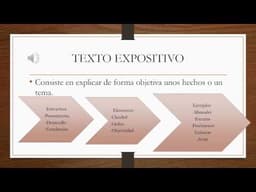
- [3:40] Explains expository text: its structure (introduction, development, conclusion), its elements (clarity, logical order, objectivity), and examples such as manuals and reports.
- [4:13] Gives an expository example about Roman gladiator fights.
- [4:48] Explains argumentative text: thesis, arguments, conclusion, and the connectors and examples used to persuade.
- [5:51] Presents an argumentative example arguing that children's diets should include all foods, not only junk food.
- [6:54] Explains dialogue or conversational text: its structure, its typical features, and its informal style.
- [7:58] Gives a dialogue example between two students and closes the presentation.
Key Takeaways
- [0:34] A text, whether spoken or written, must have a communicative situation, thematic and structural correspondence, coherence, cohesion, and correct grammar and spelling.
- [1:05] Narrative texts relate events involving characters in a specific place and time. Their structure is introduction, knot, and denouement, and their examples include news reports, chronicles, and historical accounts.
- [2:36] Descriptive texts explain what objects, people, places, situations, animals, and emotions are like, and they aim for objectivity and logical order.
- [3:40] Expository texts explain facts or a topic objectively, with a structure of presentation, development, and conclusion. The writer should not give a personal opinion.
- [4:48] Argumentative texts defend a thesis with data, reasons, and opinions to persuade the reader, and they end with a conclusion that summarizes the argument.
- [6:54] Dialogue texts reproduce the words of the characters. Their structure is greeting, presentation, development, and farewell, and they use a livelier, more colloquial style than narration or description.
- [7:25] The presenters say dialogue is informal because speakers adjust their speech in response to what they hear, unlike written text, which is more elaborated.
Action Items
- Use the listed structures (for example, introduction, development, conclusion for expository texts) as a checklist when planning or reviewing your own writing.
- Check the defining features of each text type against a reliable grammar or writing reference, since this presentation contains inconsistencies.
Caveats
- The transcript is auto-generated and contains many errors, including garbled names (for example, "Fritz freisler," "Lilan make," "Dublin") and words that don't make sense, so some details may be inaccurate.
- The presenters say that dialogue texts are "objective" and use the third person, yet they also describe them as livelier and more personal. Dialogue texts are usually marked by first- and second-person pronouns, so this part is misleading.
- The presentation describes the violin story as "not a fairy tale" without clear explanation. The example texts are simple and presented without sources.
- The presentation does not cite any authoritative sources for its definitions or examples.