The Evolution of Indonesia's Electoral Commission Structure: From 1955 to 2024
JDIHKPU_BANDUNGAI summary of “The Evolution of Indonesia's Electoral Commission Structure: From 1955 to 2024” by JDIHKPU_BANDUNG, generated by Sumvid.
Title
The Evolution of Indonesia's Electoral Commission Structure: From 1955 to 2024
One-Sentence Summary
This video traces the historical development and organizational structure of Indonesia's election administration bodies, from the initial Selection Committee in 1955 through the modern General Election Commission (KPU) system used today.
Key Takeaways
- [0:01] The 1955 elections were administered by a Selection Committee (Panitia Pemilihan) operating at national, regional, district, and village levels with 4-year tenures and varying member sizes.
- [1:04] From 1971 to 1997, the President established a General Election Institute (LPU) headed by the Minister of Internal Affairs, with a hierarchical structure of committees at provincial, district, and village levels.
- [2:07] The 1999 elections introduced the General Election Commission (KPU) with 48 members from political parties and 5 government representatives, establishing a more formal institutional framework.
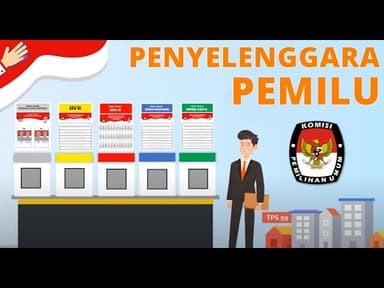
- [3:10] From 2004 onward, the KPU became a permanent, national, and independent body with permanent provincial and district/city branches, complemented by temporary ad hoc committees at lower levels.
- [4:12] The 2009 elections solidified the KPU's status as a permanent, national, and independent institution with the same hierarchical structure maintained through 2024.
- [5:14] Beyond the KPU, Indonesia's election system includes the Election Supervisory Board (Bawaslu) for monitoring all election stages and the Honorary Council of Election Organizers (DKPP) for handling ethics violations.