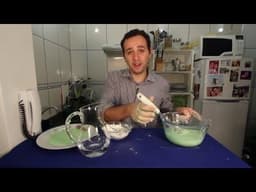
Making Oobleck: A Cornstarch Non-Newtonian Fluid Experiment
AI summary of “Making Oobleck: A Cornstarch Non-Newtonian Fluid Experiment” by Manual do Mundo, generated by Sumvid.
Title
Making Oobleck: A Cornstarch Non-Newtonian Fluid Experiment
One-Sentence Summary
The host shows a green, cornstarch-and-water mixture that acts like a liquid when stirred slowly but turns solid when struck or squeezed, and explains how to make it at home.
Worth Watching If
You want a short, visual introduction to non-Newtonian fluids or a simple kitchen science activity for kids or beginners. It is brief and mostly demonstration, so it gives little depth on the physics.
Chapters
- [0:02] The host introduces a strange liquid that behaves like a liquid when shaken gently but turns solid when struck.
- [0:32] He handles the mixture, showing that it stiffens under pressure and flows again when released.
- [1:13] He continues the demonstration, showing the material's response to pressure and sinking.
- [1:46] He compares it to quicksand and defines a non-Newtonian fluid.
- [2:17] He explains that the mixture is easy to make with cornstarch and water rather than special chemicals.
- [2:50] He gives mixing instructions and how to adjust the consistency.
- [3:23] He explains the green color comes from food coloring and points to his other videos and blog.
Key Takeaways
- [0:02] The mixture is a non-Newtonian fluid: it behaves like a liquid under gentle motion but becomes solid-like under sudden force.
- [1:46] Slowly sinking into it can trap you, which the host compares to quicksand.
- [1:46] A non-Newtonian fluid is defined as a substance that hardens under pressure and returns to liquid when the pressure is removed.
- [2:17] The entire mixture needs only cornstarch (maizena) and water; no specialized chemistry-store ingredients are required.
- [2:50] Add water gradually at first and stir until the desired consistency is reached.
- [2:50] Stirring quickly makes it resist, while stirring slowly lets it flow, which is the core of the effect.
- [2:50] If the mix is too runny, add more cornstarch; if it is too stiff, add more water.
- [3:23] The green color comes from a few drops of food coloring, and the cornstarch itself is white.
Action Items
- Combine cornstarch and water in a bowl, starting with a small amount of water and adding more gradually while stirring.
- Test the mixture by stirring slowly and then quickly to observe the change in behavior.
- Adjust the consistency: add cornstarch if it is too runny, or water if it is too stiff.
- Optionally add a few drops of food coloring for a green mixture.
Caveats
- The video promotes the host's blog and his other videos, including a mention of a weekly upload schedule.
- The quicksand comparison is dramatic. The effect is real for this kind of mixture, but the video does not explain its limits, such as the need for a sufficiently deep container or the fact that it typically holds a person only briefly.
- The explanation of the underlying physics is minimal; the video is a demonstration rather than a scientific explanation.