Network Theory and Social Dynamics: When Breaking Connections Leads to Better Outcomes
AI summary of “Network Theory and Social Dynamics: When Breaking Connections Leads to Better Outcomes” by Skeptic Hedgehog, generated by Sumvid.
Title
Network Theory and Social Dynamics: When Breaking Connections Leads to Better Outcomes
One-Sentence Summary
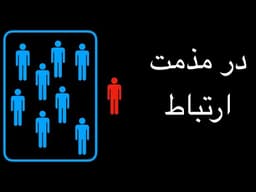
The speaker uses a memorable classroom anecdote from his former geometry teacher, combined with Damon Centola's ideas on simple versus complex contagion, to argue that too many connections can hurt creativity, decision quality, and social resilience, and that deliberately weakening or cutting network ties is sometimes beneficial.
Worth Watching If
You enjoy loosely structured, essay-style talks on network science, social contagion, and systemic risk and are comfortable with a meandering presenter. Much of the content is personal reminiscence, repetition, and tangents, and the key ideas are secondary sources (Centola, Taleb, Granovetter, Dunbar) presented informally, so readers wanting rigorous detail should look elsewhere.
Chapters
- [0:14] The speaker recalls his former geometry teacher, Mr. Reza Afshar Moghaddam, and his admiration for him
- [2:51] Describes the teacher's extracurricular math class and his unusual assignment: prove the Pythagorean theorem by any method
- [3:53] The teacher's structure: 30 minutes of silent individual thinking, then students present solutions; over 20 solutions emerge
- [8:34] Introduction of sociologist Damon Centola and his simple versus complex contagion framework
- [10:37] Explanation of epidemic concepts: R0 threshold of 1, incubation period, and why some diseases spread differently
- [15:49] Applying contagion to behaviors such as adopting solar panels and social pressure in tight-knit communities
- [18:24] Solutions to shared problems spread as simple contagion; the speaker argues disrupting networks can yield better solutions
- [26:48] Counterintuitive idea that reduced communication can aid creativity, illustrated with a U-shaped curve of connectivity versus collective utility
- [30:25] Examples: COVID-19 social distancing, separation of powers, and groupthink
- [36:11] Bostrom's superintelligence and "boxing" AI by limiting connections between domains
- [39:19] Galton's ox-weight experiment and the wisdom of crowds requiring independent estimates
- [45:33] Herding, market bubbles, and prediction markets as aggregators of collective belief
- [51:15] Black swans, fragility of over-connected systems, and examples from 2008 and the USSR
- [56:58] Analogies: mountaineers roped together, fans, diversity as protection against systemic collapse, self-driving cars
- [1:04:47] Weak ties' value, Granovetter's finding on job discovery, and Dunbar's ~150 limit
- [1:15:18] Dunbar's number and the problems of excessive online connection, with reflection on Eco and Buss
Key Takeaways
- [0:14] The speaker's geometry teacher assigned students to prove the Pythagorean theorem by any method, then had them think silently for 30 minutes before presenting; more than 20 distinct proofs emerged.
- [10:37] Damon Centola distinguishes simple contagion (spreads after one exposure, e.g., adopting a shared solution) from complex contagion (needs reinforcement from multiple sources, e.g., costly behaviors like installing solar panels).
- [11:10] The R0 threshold of 1 separates diseases that spread widely from those that die out; COVID-19's Omicron variant is cited as having a high value.
- [18:24] When a network shares a single problem, the first proposed solution tends to spread instantly, which may prevent a better solution from being found.
- [26:48] The speaker argues that a U-shaped relationship exists between connectivity and collective utility: beyond a point, more links reduce quality, and some isolation can improve creative outcomes.
- [30:25] Pandemic-era social distancing and lockdowns are framed as deliberately disrupting the transmission network.
- [36:11] Bostrom's idea that boxing AI, limiting its connections across domains, could be a containment strategy.
- [39:51] Galton's 1906 ox-weight contest: averaging about 800 independent estimates came close to the true weight, and the speaker stresses that independence of estimates is essential.
- [45:33] Excessive information sharing can turn collective wisdom into herd behavior, illustrated by stock bubbles.
- [56:58] Taleb's black swan logic: tightly coupled systems look stable until a sudden collapse, as in the 2008 crisis.
- [1:04:47] Mark Granovetter's "strength of weak ties" suggests that many jobs are found through acquaintances rather than close friends.
- [1:15:18] Robin Dunbar's estimate of about 150 as the number of stable social relationships a person can manage.
Action Items
- Before group brainstorming, have individuals work alone for a set period before sharing ideas to avoid early anchoring on the first solution.
- When gathering estimates or opinions, collect them independently rather than letting participants see each other's answers.
- Deliberately maintain some weak ties outside your usual circle, such as acquaintances in unrelated fields, to encounter new ideas.
- Audit your group chats and online networks for redundancy and echo effects, and reduce membership where it adds noise rather than value.
Caveats
- Much of the argument is analogy and speculation (e.g., self-driving cars, Sarkozy-style systemic claims, the Soviet Union and Syria comparisons) rather than cited evidence.
- Several claims are loosely attributed or paraphrased from memory, including Galton's experiment details, the Dunbar figure (which the speaker notes is contested), and claims about Centola's and Taleb's positions.
- The speaker admits he has not read several books he cites (Janis's Victims of Groupthink, Bregman-style and Burnham-style references, Diamond's work), so those summaries are secondhand.
- Political and social examples (Iran protests, Saudi Arabia, democracy and separation of powers) are presented with strong opinion and limited sourcing.
- The speaker presents his own framing of Centola's work as a settled principle; the original research is more nuanced.
- The transcript contains a passage that appears to be a sponsored or self-promotional tangent only lightly flagged; no explicit sponsor was identified.