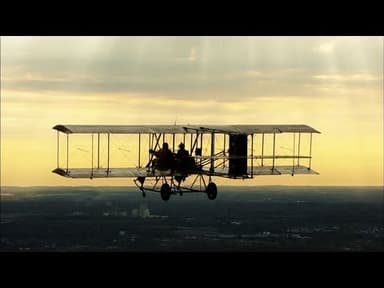
The Wright Brothers: From Dayton Bicycle Shop to the Birthplace of Aviation
Smithsonian ChannelAI summary of “The Wright Brothers: From Dayton Bicycle Shop to the Birthplace of Aviation” by Smithsonian Channel, generated by Sumvid.
Title
The Wright Brothers: From Dayton Bicycle Shop to the Birthplace of Aviation
One-Sentence Summary
The Wright brothers transformed their Dayton, Ohio bicycle shop into the cradle of modern aviation, achieving the first sustained powered flight in 1905 and subsequently mass-producing the world's first commercial airplane.
Key Takeaways
- [0:02] Ohio's Dayton became the birthplace of aviation, where brothers Wilbur and Orville Wright ran a modest bicycle shop and printing press before pursuing their dream of flight
- [0:34] The Wright brothers applied their knowledge of balance and control from bicycle mechanics to design and test unmanned gliders before attempting powered flight
- [1:07] After numerous attempts, Orville achieved a historic 39-minute flight in October 1905, circling the field 29 times—a dramatic leap from their previous brief flights
- [1:40] The Wright brothers developed the Model B Flyer around 1910, becoming the world's first mass-produced airplane, selling approximately 100 units to the U.S. Army and other buyers
- [2:12] A functional replica of the Model B, nicknamed the "brown bird," has been flying since 1982 with modern modifications including steel frames and Harley-Davidson tires while maintaining the original's two-seater design
- [3:16] The Wright brothers understood that success depended more on skill and ingenuity than on advanced machinery, as Wilbur emphasized: "What is chiefly needed is skill rather than machinery"