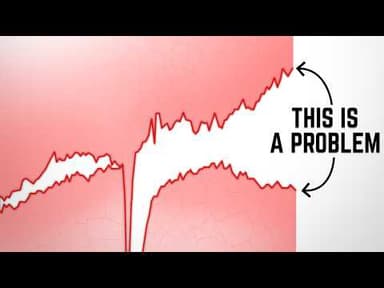
The Corporate Profit Paradox: How Government Deficits Are Masking Economic Inequality
Bravos Research11:22Open on YouTube ↗
AI summary of “The Corporate Profit Paradox: How Government Deficits Are Masking Economic Inequality” by Bravos Research, generated by Sumvid.
Title
The Corporate Profit Paradox: How Government Deficits Are Masking Economic Inequality
One-Sentence Summary
Corporate profits have reached record highs as a share of GDP while worker wages hit historic lows, a dangerous imbalance that the government has been artificially sustaining through deficit spending, but rising interest rates may finally trigger an overdue economic reset.
Key Takeaways
- [0:00] Corporate profits now represent 14% of GDP—an all-time high—while wages have simultaneously fallen to their lowest share of the economy ever recorded, creating a historic wealth distribution gap.
- [1:02] Historically, whenever corporate profit margins became this extreme, the economy experienced a painful correction that rebalanced income distribution, but this pattern has been broken over the past 15 years.
- [3:40] Government budget deficits and corporate profits have become remarkably correlated; as the government spends more money, those dollars flow through the economy as corporate revenue, artificially propping up profit margins.
- [6:44] Rising interest rates on government bonds (from ~0% to 5% since 2022) are constraining the government's ability to run large deficits, potentially removing the financial support that has kept corporate profits inflated.
- [8:18] The 1970s-80s demonstrate what happens when interest rates climb: corporate profits fall sharply as a percentage of GDP, leading to greater wealth equality but only after severe recessions and unemployment spikes.
- [9:51] The government may employ "financial repression"—having the central bank buy government bonds to artificially suppress interest rates—to delay the economic reset and maintain the current system of unequal capital distribution.