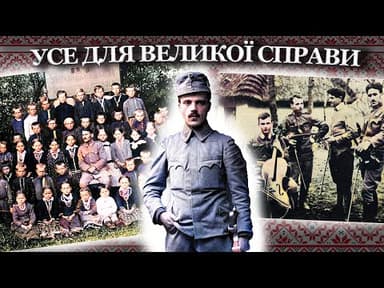
The Cultural and Educational Legacy of Ukrainian Sich Riflemen During Their Rest Period in World War I
КАМЕНЯР24:18Open on YouTube ↗
AI summary of “The Cultural and Educational Legacy of Ukrainian Sich Riflemen During Their Rest Period in World War I” by КАМЕНЯР, generated by Sumvid.
Title
The Cultural and Educational Legacy of Ukrainian Sich Riflemen During Their Rest Period in World War I
One-Sentence Summary
During a six-month rest period behind Austro-Hungarian lines in 1915-1916, Ukrainian Sich Riflemen engaged in extensive cultural, educational, and nationalist activities that left a lasting impact on Ukrainian national consciousness and became a model for future generations.
Key Takeaways
- [0:41] After heavy combat, the Ukrainian Sich Riflemen regiment withdrew to rear positions near Sosnovyy and Tudynka, where they reorganized and developed a strong sense of unit cohesion while becoming disillusioned with Austro-Hungarian authorities' dismissive treatment of Ukrainian interests.
- [3:39] A "press office" unit composed of the most educated and creative officers established systematic cultural and educational programs, collecting memoirs, photographs, literature, and facilitating creative expression through writing, poetry, painting, and music composition.
- [6:15] Notable composers and authors like Mykhaylo Hayvoronsky, Levko Lepky, and Bohdan Lepky created iconic Sich Riflemen songs (including "Chervona Kalyna" and "Oy, Vodno Selo") that became deeply embedded in Ukrainian national consciousness and served as vehicles for political aspirations.
- [10:52] The riflemen insisted on conducting all military operations and communications exclusively in Ukrainian, forcing Austrian officers to develop Ukrainian military terminology that later proved invaluable for the West Ukrainian People's Republic's military administration.
- [13:29] Beyond internal cultural activities, the riflemen systematically organized educational initiatives including literacy courses, concerts, Shevchenko commemorations, and agricultural assistance to local villages, combining practical aid with nationalist consciousness-raising.
- [20:23] When recruitment of volunteers in Russian-occupied Volhynia proved unsuccessful due to centuries of Russification policies, the riflemen pivoted to educational work, establishing 50 Ukrainian schools by 1917 and 150 by 1918, funded entirely through Galician Ukrainian donations.
- [23:02] This approximately five-month rest period represented a transformative moment where a small group of idealistic educated youth created lasting cultural and institutional foundations for Ukrainian national awakening that influenced subsequent generations and movements.