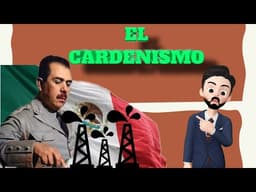
Cardenismo in Mexico: The Oil Expropriation and Agrarian Reform of Lázaro Cárdenas
AI summary of “Cardenismo in Mexico: The Oil Expropriation and Agrarian Reform of Lázaro Cárdenas” by Profesor Geovanni, generated by Sumvid.
Title
Cardenismo in Mexico: The Oil Expropriation and Agrarian Reform of Lázaro Cárdenas
One-Sentence Summary
This Spanish-language classroom lesson explains how President Lázaro Cárdenas's 1930s program of oil expropriation and mass land redistribution aimed to restore political stability and address the unfinished demands of the Mexican Revolution.
Worth Watching If
You are a student or general learner who needs a short, clear introduction to the Cardenismo period. It is a basic overview with little depth, so it works best as a starting point before a more detailed text.
Chapters
- [0:00] Introduction to the lesson on Cardenismo, its oil expropriation, and agrarian reform
- [0:31] Definition of Cardenismo and its context: the 1910 revolution, World War I, and regional caudillos
- [2:08] The 1928–1934 Maximato and the goals of the Cárdenas government
- [2:39] Porfirian-era foreign investment in oil, railways, and mining, and the two main government initiatives
- [3:11] Labor conflict with foreign oil companies, the 1936 union contract proposal, and the 1937 strike
- [4:13] The legal basis for expropriation (Article 27 and the 18 March 1938 decree) and the creation of PEMEX
- [5:15] Agrarian reform and the ejido system
- [5:46] Ending the latifundio, the Plan Sexenal, and the redistribution of land
- [7:21] Results: the ejidatarios as a support base and reduced armed unrest
Key Takeaways
- [0:31] Cardenismo was a political movement in 1930s Mexico, named after President Lázaro Cárdenas, aimed at restoring social and political stability.
- [1:36] By 1920, roughly a decade after the 1910 revolution, regional caudillos still dominated large areas, and the state needed new institutions to consolidate power.
- [2:08] From 1928 to 1934, the Maximato saw Plutarco Elías Calles govern through a political party while being named "Jefe Máximo de la Revolución."
- [2:39] The two main government initiatives were oil expropriation and agrarian reform.
- [3:43] In 1936, the oil workers' union proposed a collective contract with higher wages and better conditions; the companies rejected it, and workers went on strike in 1937.
- [4:13] Expropriation rested on Article 27 of the Constitution and the expropriation law of 18 March 1938, giving the state control over the entire oil industry, from exploration to marketing.
- [4:44] PEMEX was created on 7 June 1938 to run the nationalized oil industry.
- [5:46] Agrarian reform aimed to end the latifundio system and weaken the political and economic power of landowners. The ejido was presented as the basis of agricultural production.
- [7:21] The video estimates that nearly 18 million hectares were distributed during the sexenio, and the ejidatarios became a strong base of support for the government.
Action Items
- Read Article 27 of the 1917 Mexican Constitution to see the legal basis for both expropriation and land reform.
- Look up the text of the 18 March 1938 expropriation decree and compare its scope with the video's description.
- Review the Plan Sexenal to see which goals the Cárdenas government set and how many it met.
- Check the 18 million hectare figure against an academic source, such as a history text or a scholarly article on agrarian reform.
Caveats
- The land figure is presented as an estimate ("se calcula"), and the video cites no source for it.
- The video omits the international consequences of expropriation, such as diplomatic disputes with the United Kingdom and the United States, and how compensation was handled. These are important for a full understanding.
- The presentation is simplified and somewhat idealized. It describes the reforms as largely successful and gives little attention to their limitations or criticisms.