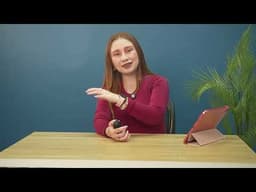
NLP Module 4: Representational Systems (Visual, Auditory, Kinesthetic) in Communication
AI summary of “NLP Module 4: Representational Systems (Visual, Auditory, Kinesthetic) in Communication” by Centro de Conocimiento Alejandría, generated by Sumvid.
Title
NLP Module 4: Representational Systems (Visual, Auditory, Kinesthetic) in Communication
One-Sentence Summary
The speaker explains the NLP idea of visual, auditory, and kinesthetic representational systems and shows how to use them to observe and adapt communication, with self-reflection exercises and advice on feedback, habit-building, and affirmations.
Worth Watching If
You are new to NLP or want practical, everyday communication tips about tone, pacing, pauses, and reading body language. Experienced NLP practitioners will mostly find familiar material, and the video is loosely structured and repetitive, with a lot of general self-help filler.
Chapters
- [0:04] Module opener and recap of NLP foundations: experience, language, and "map vs. territory"
- [1:05] What representational systems are, with a caveat that the evidence for them is limited
- [2:38] The visual system: example language and adapting communication with maps and signage
- [5:44] The auditive system and why it matters in phone and online communication
- [7:49] Vocal elements: volume, speed, pauses, intonation, and rhythm
- [13:05] The kinesthetic system and public-speaking anxiety
- [16:43] Combining systems, with a performance-review example
- [23:01] The one-minute listening and observation exercise, plus body-language notes
- [28:17] The "hear, observe, adapt" model and the three-column self-assessment exercise
- [33:38] Matching communication styles with others and sharing your communication preferences
- [37:16] Asking others for feedback, plus the "alter ego" and love-languages analogies
- [47:37] Habit formation, continuous improvement, and affirmations
Key Takeaways
- [1:05] Representational systems are presented as an NLP model, not a scientifically proven classification of people, and the speaker says the evidence on preferred systems is limited.
- [2:38] Visual language includes phrases like "I see," "show me how it works," and "it might be complicated." These phrases reflect how a person is currently framing an experience and do not reveal a fixed personality type.
- [7:49] Vocal delivery matters as much as word choice: volume, speed, pauses (ideally under 10 seconds), intonation, and rhythm can change how a message is received.
- [13:05] Kinesthetic language covers bodily and emotional sensations ("I feel tension," "I feel pressure"). The speaker recommends identifying whether a person experiences a situation as a threat or an opportunity.
- [16:43] The speaker argues that people combine modalities, so no one should be treated as purely visual, auditory, or kinesthetic.
- [23:01] The speaker suggests a one-minute observation exercise: listen to someone without interrupting and note their visual, auditory, and kinesthetic expressions, including hand movements and gaze.
- [28:17] The "hear, observe, adapt" model: listen to the words, observe tone, rhythm, posture, and gestures, then adjust your communication.
- [28:51] A self-assessment exercise: list situations that cause anxiety in three columns (visual, auditory, kinesthetic) to see which systems are affected.
- [37:16] The speaker recommends asking trusted friends for honest feedback, such as "Why do you always make that comment?" If someone repeats the same comment, the speaker suggests the cause may be a habit to improve.
- [50:46] The speaker recommends daily affirmations and "acting as if" you already have the desired quality, arguing that the brain responds to such statements.
Action Items
- Spend one minute silently observing someone you know, noting their words, tone, posture, and gestures, without interrupting or telling them what you are doing.
- Make a three-column list (visual, auditory, kinesthetic) of situations that make you anxious, and note which system is most affected in each.
- Ask two or three trusted people for specific feedback on how you communicate, and reflect on any comments they repeat.
- When explaining something complex, combine spoken explanation with a visual aid, and use deliberate pauses and varied intonation.
- Create an "alter ego" by describing how your ideal self would act in a challenging situation, then consciously act that way.
- Write short, daily affirmations in the present tense and practice the behaviors they describe, aiming for consistency over time.
Caveats
- The speaker acknowledges that NLP representational systems have limited scientific support, but still presents the framework as a practical tool. Treat its descriptions as a heuristic, not a validated model.
- Several claims lack sources: a Forbes study on public speaking fear, unnamed "Chilean institutional" data suggesting people quit relationships more than jobs, and the statement that habits take at least 90 days to form. The 90-day figure is commonly repeated but is not well established.
- A Richard Branson quote ("act as if you already are") is attributed without a source.
- Some statements are overstated: that the brain cannot distinguish real from imagined experiences, and that negative words "attract" negative things. These are presented as fact without evidence.
- The speaker repeatedly uses the names Brian Tracy and Carl Jung with little explanation, and references a "10X" continuous-improvement idea tied to Google without substantiation.
- The video contains no sponsor segments.
Suggested Category Tags
More from Centro de Conocimiento Alejandría
Observation and Calibration in Interpersonal Communication (NLP Course Module)
Centro de Conocimiento Alejandría
Module 3: Language, Thought, and Meaning Construction (An NLP Course Lecture)
Centro de Conocimiento Alejandría
Module 1: Introduction to Neuro-Linguistic Programming (Origins, Concepts, and Limits)
Centro de Conocimiento Alejandría
The Map Is Not the Territory: Perception, Beliefs, and Communication in NLP
Centro de Conocimiento Alejandría
Emotion Regulation, Impulses, and the Brain-Body Link: A Final Session on Behavioral Neuroscience
Centro de Conocimiento Alejandría
Factors That Help or Hinder Learning: Neuromyths, Sleep, and Emotional Regulation
Centro de Conocimiento Alejandría