
Linux Terminal Basics: A Beginner's Guide to File Navigation and Management
AI summary of “Linux Terminal Basics: A Beginner's Guide to File Navigation and Management” by Telep, generated by Sumvid.
Title
Linux Terminal Basics: A Beginner's Guide to File Navigation and Management
One-Sentence Summary
This introductory tutorial demystifies the Linux terminal by teaching fundamental commands for navigating directories, creating and editing files, and managing the file system.
Key Takeaways
- [0:00] The channel aims to make computer technology and coding accessible by breaking down concepts into simple foundational principles (ones and zeros, conditions).
- [2:37] The terminal is simply a text-based file explorer; it's not scary and functions the same way as graphical file explorers on any operating system.
- [4:42] Essential terminal commands include
pwd(path of working directory),ls(list contents),mkdir(make directory), andcd(change directory). - [6:14] Files can be created with the
touchcommand and edited usingnano, a beginner-friendly text editor built into most Linux systems. - [8:52] Saving in nano requires
Ctrl+Oto write to a buffer andCtrl+Xto exit the editor;cat,head, andtailcommands allow viewing file contents. - [12:35] Navigation shortcuts like
cd ..(go back one directory) andcd ../..(go back multiple directories) enable efficient movement through the file system. - [14:45] Files and directories can be deleted using
rm(remove file) andrmdir(remove directory) commands.
Suggested Category Tags
More from Telep
Linux Alphabet Command Guide: Exploring the 'at' Scheduler and 'aspell' Spell Checker
Telep
Linux Alphabet Command Tutorials: The Ampersand (&) Operator
Telep
Linux Alphabet Commands Tutorial: Understanding and Using the Alias Command
Telep
Alphabet Linux Tutorial: Understanding the `apropos` Command and Manual Pages
Telep
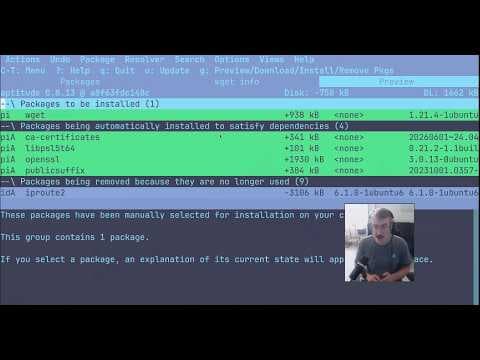
Linux Package Management Tools: A Complete Guide to APT, APT-GET, APT-CACHE, and APTITUDE
Telep